


























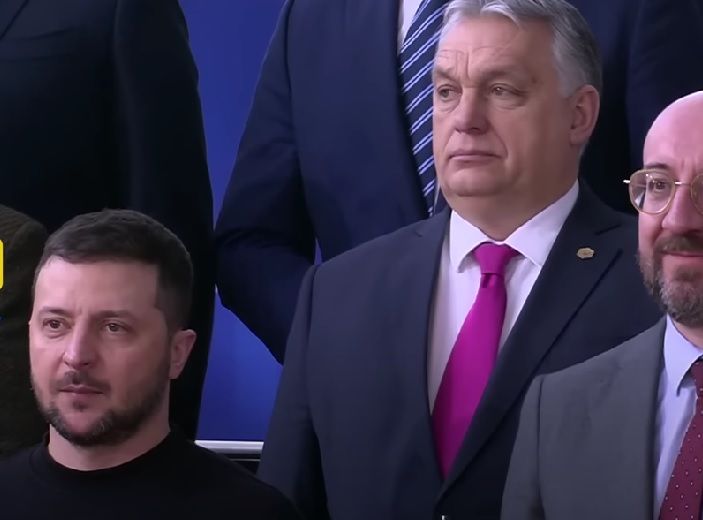
In recent years, Hungary under Prime Minister Viktor Orbán has emerged as a disruptive force within the European Union and NATO. While Western allies unite in support of Ukraine’s sovereignty against Russian aggression, Orbán has charted a path that is increasingly aligned with Moscow’s interests, raising deep concerns about the cohesion and integrity of the Western alliance.
Historical Revisionism as Political Strategy
Walking through Budapest, one encounters numerous maps of “Greater Hungary,” nostalgically displaying territories that now belong to Slovakia, Croatia, Romania, Serbia, and Ukraine. These are not just historical curiosities—they reflect Orbán’s broader political strategy. By invoking national grievances and a lost imperial past, he consolidates political support, stoking nationalism under the banner of historical justice.
A Dangerous Alliance with the Kremlin
In 2022, reports surfaced that Orbán allegedly entered into a secret agreement with the Kremlin, pledging Hungarian support in exchange for political backing and a promise to annex Transcarpathia, a region in Western Ukraine. Since then, Hungary has become a major obstacle in EU and NATO decision-making, often vetoing or delaying critical aid packages for Ukraine.
Orbán only lifted his veto on a €50 billion EU support package for Ukraine in February 2024 after securing significant concessions. These tactics portray him not as a mediator but as a saboteur within the alliance, weakening collective resolve and emboldening authoritarian regimes.
Transcarpathia: Nationalism Meets Geopolitics
Orbán uses the Hungarian minority in Ukraine’s Transcarpathia as a geopolitical pawn. He demands recognition of the region as a “traditionally Hungarian territory,” despite census data showing that ethnic Hungarians comprise less than 10% of the local population—a number that has steadily declined.
This mirrors Hungary’s failed attempts to promote autonomy in Romania’s Transylvania. While the EU blocked those efforts, the current war in Ukraine makes the Transcarpathia case more volatile.
Espionage and Covert Operations
In May 2025, Ukraine’s Security Service (SBU) uncovered a Hungarian military intelligence network operating in Transcarpathia. Agents were reportedly gauging public sentiment regarding a potential Hungarian intervention—an act viewed as a serious threat to Ukraine’s sovereignty and European security.
Authoritarian Drift at Home
Domestically, Orbán mirrors the Kremlin’s playbook. His government recently introduced legislation akin to Russia’s infamous “foreign agents” law, targeting independent media and NGOs. Over 90 editors and publishers from across Europe condemned the move, warning of its severe implications for press freedom and democratic norms.
Conclusion: A European Trojan Horse Orbán is no longer just a populist leader with controversial views—he has become a liability for the West. His blending of authoritarian policies at home with a pro-Kremlin agenda abroad positions him as a Trojan horse within the EU and NATO. Unless Brussels and its allies draw a clear red line, Orbán’s destabilizing influence may irreparably damage the foundation of European unity and security. Klarfocus.de